
In a fast-moving economy, making smart financial decisions is no longer optional. Yet traditional financial education often feels abstract, theoretical, and disconnected from real life.
Interactive learning changes that by turning financial concepts into hands-on experiences that build confidence, clarity, and long-term retention.
What Is Interactive Learning in Financial Education?
Interactive learning is an educational approach that requires active participation rather than passive listening. Instead of only receiving information through lectures, learners engage through discussions, simulations, quizzes, role-playing, and real-time decision-making exercises.
Some common methods of interactive learning include:
Group Discussions: Learners share ideas, challenge each other, and deepen understanding through dialogue.
Simulations and Roleplaying: Real-life scenarios help students experience decision-making firsthand.
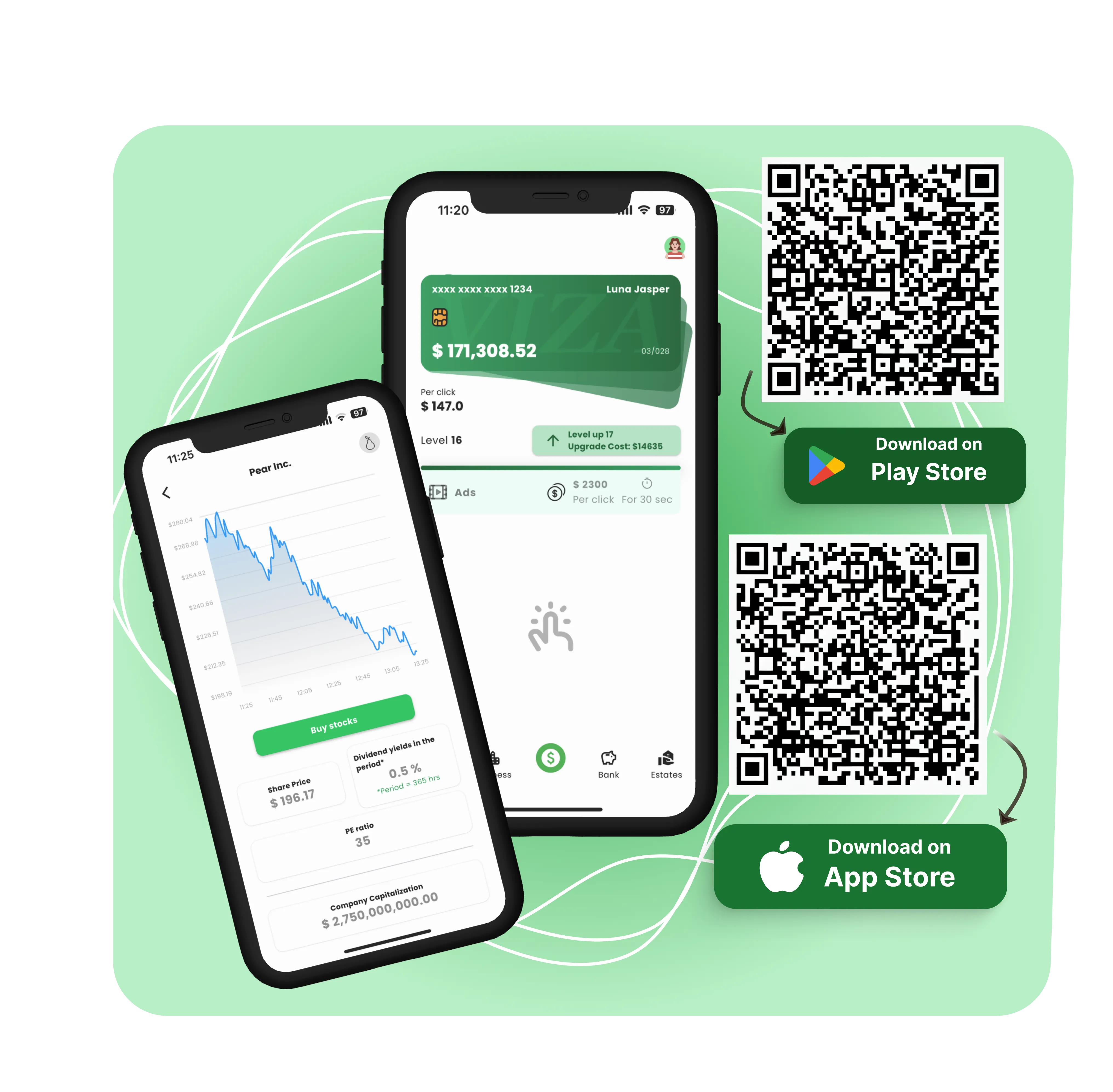
Educational Games and Apps: Games like Billionaire Business Empire provide a fun and motivational way to explore financial topics.
Case Studies: Real or fictional cases encourage analysis, problem-solving, and critical thinking.
Live Quizzes and Polls: Immediate feedback reinforces learning and maintains attention.
In financial education, these methods turn abstract concepts into practical experiences that learners can test, measure, and apply.
Why Financial Education Requires Interactive Learning
Financial education is not just about definitions or formulas. It is about making real-world decisions: budgeting income, managing debt, investing wisely, and planning for future goals.
Therefore, the practical, personal nature of finance is an excellent source of material for interactive learning.
Here's how interactive learning benefits financial education:
Makes Abstract Concepts Concrete
Financial terms such as compound interest or diversification can be confusing when explained in theory. But when learners use a calculator to see interest grow over time, or simulate investment strategies, these ideas suddenly make sense.
Builds Confidence Through Experience
Money matters often scare a lot of people; others simply do not know much about them. Interactive learning provides a haven where students can freely try, make mistakes, and learn.
For example, a student can see what happens when they overspend in a budgeting game, without suffering real-world consequences.
Enhances Retention
Research shows that people retain information better when they actively participate rather than only read or listen. Most of these simulations engage multiple senses and learning styles, encouraging better recall and application.
Promotes Problem Solving and Critical Thinking
Money management isn't about memorizing facts; it's about making decisions. By studying case studies or simulating financial decisions, learners acquire real-life analytical skills they will shortly need in the real world.
Encourages Ongoing Curiosity
Active students tend to get their questions answered, explore topics, and engage in learning beyond the classroom. This self-directed curiosity is a key driver of long term financial growth.
Practical Examples of Interactive Learning in Finance
Interactive learning can take many forms. Here are several powerful ways to make financial education hands-on and engaging:
Budgeting Simulations
Students are assigned a monthly income along with fixed and variable expenses such as rent, groceries, transportation, entertainment, etc. They have to make choices within a budget framework, let go of certain expenses that they would have otherwise liked to incur, or make plans to save some amounts.
What it teaches: Goal setting, financial planning, tradeoffs, and needs vs. wants.
Investing Games
Using virtual stock trading platforms or classroom simulations, students choose stocks or mutual funds to invest in. They track their portfolio performance over time and learn how market factors influence their investments.
What it teaches: Risk tolerance, diversification, the power of compounding, and long-term thinking.
Credit Score Scenarios
Students play roles where they make financial choices like paying bills, applying for credit cards, or missing payments. Each action affects their simulated credit score.
What it teaches: Credit management, consequences of financial behavior, and responsible borrowing.
Financial Literacy Apps and Gamified Tools
Financial literacy apps and gamified tools break concepts into interactive lessons with quizzes, rewards, and progress tracking to maintain motivation.
What it teaches: Foundational knowledge, motivation to learn, and tech-savvy financial habits.
How Educators Can Implement Interactive Financial Learning
If you are an educator looking to introduce interactive learning into your financial curriculum, here are practical steps to guide you:
Begin with Clear Learning Goals
Define the financial concepts you hope students will acquire, such as budgeting basics, credit, or even saving. Each one of the activities should correspond to a clearly defined objective, so you remain clear and on focus.
Use Real Life Scenarios
Tailor examples to the students' age group and context. For high school students, planning a prom or summer job budget might be more relevant than retirement planning.
Incorporate Technology Thoughtfully
Leverage platforms that allow for interactive exercises, like Google Forms for quizzes, Excel for budgeting spreadsheets, or online simulations for investments. Keep the tools simple and accessible.
Encourage Group Work and Peer Feedback
Let students collaborate in budgeting exercises or evaluate each other's investment strategies. This builds communication skills and allows learners to benefit from different perspectives.
Assess Progress Through Reflection
Encourage students to keep financial journals or complete self-assessment checklists. These reflective tools help them connect the dots between their choices and outcomes.
Stay Flexible and Adaptable
Educators should adapt activities based on student engagement levels, comprehension, and feedback to maximize learning outcomes. Interactive learning thrives when it's responsive.
Key Takeaways
Interactive learning improves financial IQ through active participation.
Simulations and budgeting exercises make abstract concepts practical.
Real-world decision-making builds confidence and long-term retention.
Educators can implement interactive tools with or without advanced technology.
Final Thoughts
Interactive learning transforms financial education from passive theory into practical skill-building. By using simulations, budgeting exercises, investment scenarios, and real-time feedback, learners gain confidence and improve decision-making abilities.
Financial IQ grows fastest when knowledge is applied, tested, and reflected upon consistently.
Download the Billionaire's Business Empire | Android | IOS | for interactive learning
FAQs
What is financial IQ?
Financial IQ refers to a person's ability to understand and apply financial concepts such as budgeting, saving, investing, debt management, and long-term planning in real-life situations.
Can interactive learning influence behavior in terms of financial discipline more than knowledge?
Definitely. One of the advantages of interactive learning is that it puts the learner in a real-life decision-making scenario, showing immediate outcomes of a learner's choices. This keeps reinforcing positive financial habits, thus encouraging healthy behavior over a period of time.
Is it more beneficial to learn finance interactively than through conventional means?
While lectures and textbooks give students the basic foundation of knowledge, such a lesson or method does not really involve all the senses as interactive lifelong learning does. Retention of information and application of it in real situations becomes a concept better learned in interactive financial education because these two aspects, among others, include decision-making and real-life instances.
Does interactive learning apply to all age brackets in finance?
Interactive financial learning could be modified for children, teens, or adults. Activities and tools can also vary according to ages and levels of comprehension, such as game play for younger learners and simulations or case studies for older learners.
Is technology a necessity to participate in interactive learning methods?
Not necessarily. Although apps and online platforms have changed the ways in which many people really understand learning, there are many other interactive strategies that can be done offline, such as budgeting, roleplays, group discussions, board games, or paper-based simulations.
Does a teacher need to have a financial background in order to teach financial literacy in an interactive manner?
As explained, there are financial experts who are teachers. However, it is possible to teach any subject in an active, participatory manner without requiring the teacher to have an education in that subject.
Structured lesson plans, curated resources, and some simple tools will allow educators to guide their students through basic concepts using real-world examples and activities that promote exploration and discussion.
How would you define success in terms of interactive financial learning?
Success can be measured through a combination of formative assessments, like quizzes or reflections, and practical application, such as students creating a personal budget or analyzing a financial scenario. Progress is often seen in confidence and improved decision-making, not just test scores.


