
Idle business games have become one of the most widely played genres in mobile and browser gaming.
At first glance, they appear simple, tap, upgrade, and earn money. But beneath that simplicity lies a carefully designed system built around mathematical progression, behavioral psychology, and long-term engagement.
Games like Billionaire Business Empire are not just about earning virtual money. They are structured to simulate growth systems, where small decisions compound over time and determine how quickly a player progresses.
Understanding how these systems work is the difference between slow, frustrating gameplay and efficient, accelerated growth.
What Are Idle Business Games?
Idle business games, also known as incremental or clicker games, are designed around the concept of passive progression. Instead of requiring constant interaction, these games continue generating income even when you are not actively playing.
The player's role is not to perform repetitive actions but to optimize systems, choosing where to invest, when to upgrade, and how to scale operations. This shift from action to strategy is what defines the genre.
The Core Principle: Passive Income
At the heart of every idle business game is passive income. Once a business is set up, it continues to generate revenue automatically over time.
This creates a fundamental gameplay loop:
Generate income
Reinvest profits
Increase output
Over time, this loop becomes more powerful as upgrades improve efficiency and output. The key insight is that income does not depend on activity, it depends on optimization.
The Growth Engine: Compounding
Compounding is the most important concept in idle games. It refers to the process where earnings are reinvested to generate even more earnings, creating exponential growth.
In practical terms:
A small upgrade increases income
That income allows faster reinvestment
Faster reinvestment leads to larger upgrades
The cycle repeats at an accelerating rate
Players who understand compounding progress significantly faster than those who do not.
Without compounding, growth remains linear. With it, growth becomes exponential.
The Role of Upgrades and Multipliers
Upgrades are not just incremental improvements, they are the primary drivers of scaling.
Most idle games include:
Income multipliers
Speed boosts
Automation upgrades
These upgrades increase efficiency rather than just output, which means their impact compounds over time.
For example, doubling production speed does not just double income, it also increases how often income can be reinvested, amplifying growth further.
Automation: The Transition from Active to Idle
Early in the game, players often interact more frequently. However, as automation systems unlock, the gameplay shifts.
Automation allows businesses to operate without manual input, reinforcing the idle nature of the game. At this stage, success depends less on how often you play and more on how well your systems are optimized.
This transition is intentional. It moves the player from manual effort to strategic decision-making.
Why Progress Feels Slow (and Then Suddenly Fast)
One of the defining characteristics of idle games is uneven progression. Early stages may feel slow, while later stages accelerate rapidly.
This happens because:
Early upgrades have limited impact
Compounding has not fully developed
Income cycles are still small
As investments grow, each upgrade has a larger effect, and compounding begins to take over. This creates a tipping point where growth accelerates dramatically.
Understanding this pattern prevents frustration and helps players stay focused on long-term efficiency.
Resource Management and Decision-Making
Idle games are fundamentally about resource allocation. Every decision, whether to upgrade, expand, or save, affects your future growth.
Poor decisions often include:
Investing in low-return businesses
Expanding too early
Ignoring upgrade efficiency
Efficient players evaluate decisions based on return on investment (ROI) rather than immediate rewards. This strategic layer is what separates idle games from simple clickers.
The Psychology Behind Idle Games
Idle business games are designed to keep players engaged over long periods. This is achieved through a combination of psychological principles:
Progress Visibility
Players constantly see numbers increasing, reinforcing a sense of achievement.
Reward Timing
Frequent small rewards are combined with occasional large milestones.
Anticipation
Upgrades and unlocks create goals that keep players invested.
Low Effort, High Return
The ability to progress without constant interaction makes the experience accessible and satisfying.
These elements work together to create a loop that is both engaging and habit-forming.
Why Strategy Matters More Than Activity
A common misconception is that playing more leads to faster progress. In idle business games, this is not true.
Progress depends on:
Choosing the right investments
Timing upgrades correctly
Reinvesting efficiently
A player who logs in strategically and makes optimized decisions will outperform someone who plays frequently without a plan.
How to Apply This in Billionaire Business Empire
Understanding these mechanics gives you a direct advantage.
In Billionaire Business Empire, this means:
Prioritizing high-ROI businesses
Reinvesting profits consistently
Focusing on scalable ventures
Avoiding unnecessary expansion
When applied correctly, these principles significantly increase your growth speed and overall efficiency.
The Evolution of Idle Business Games
Over time, idle games have evolved from simple clickers into complex economic simulations. Modern titles incorporate:
Multiple business layers
Strategic depth
Long-term progression systems
This evolution has made them more engaging and more competitive, especially for players aiming to optimize performance.
Final Insight
Idle business games are not about tapping faster or playing longer. They are about understanding systems and making better decisions.
Once you recognize how passive income, compounding, and scaling interact, the game becomes less about guessing and more about strategy.
That shift in perspective is what turns slow progress into rapid growth.
Visit thebillionaireempire.org
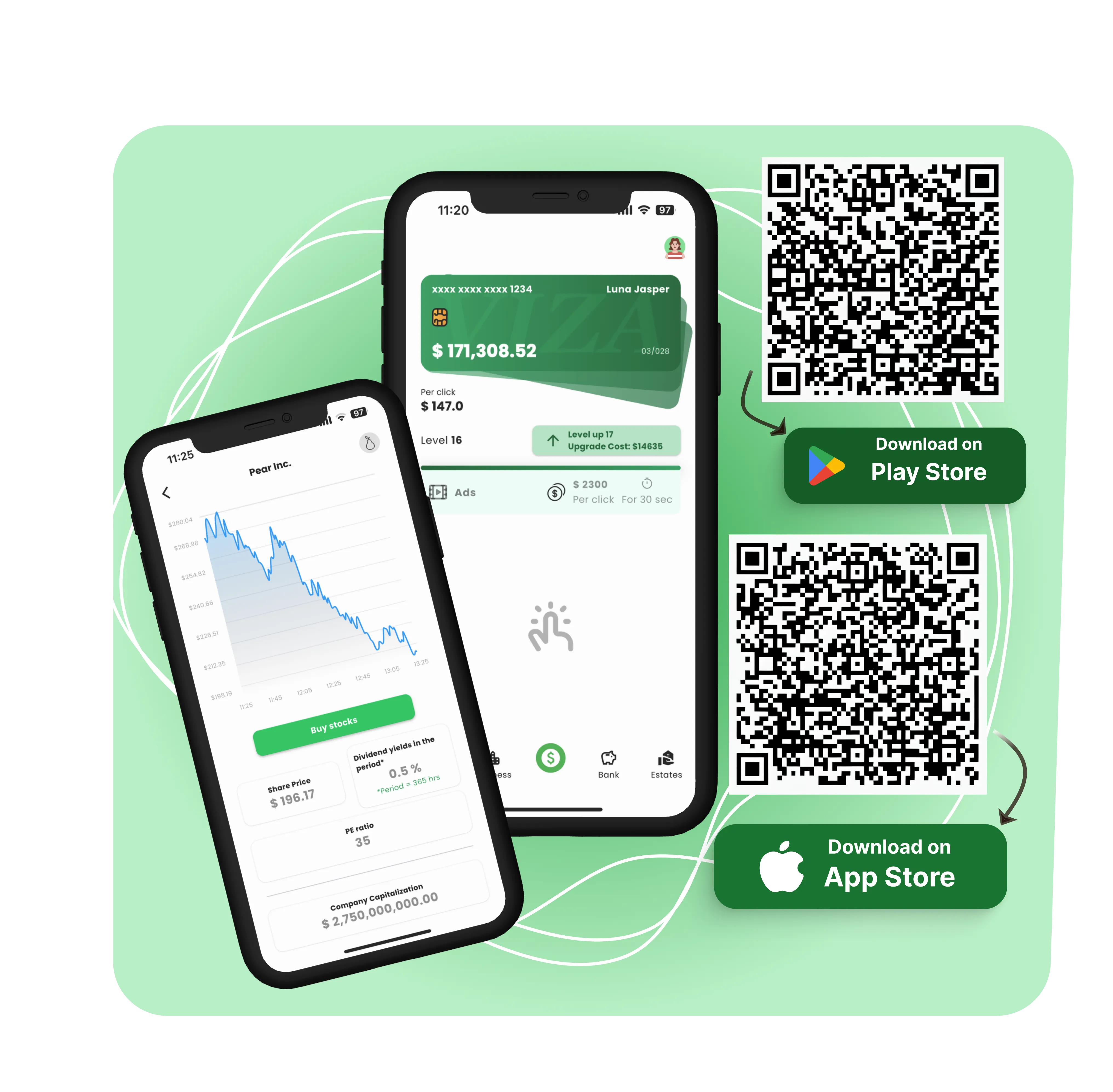
Download the Game | Android | IOS |
FAQs
What are idle business games?
Idle business games are simulation games where income is generated automatically over time, even when the player is not actively playing.
How do idle games make money grow faster?
They use compounding systems where reinvested earnings increase future income exponentially.
Do you need to play idle games constantly?
No. Progress depends more on strategy than constant interaction.
Why do idle games feel slow at the beginning?
Early stages lack strong compounding, so growth appears slower until systems scale.
What is the key to success in idle business games?
Efficient investment, timely upgrades, and consistent reinvestment of profits.


